Above Ground Pool Buying Guide
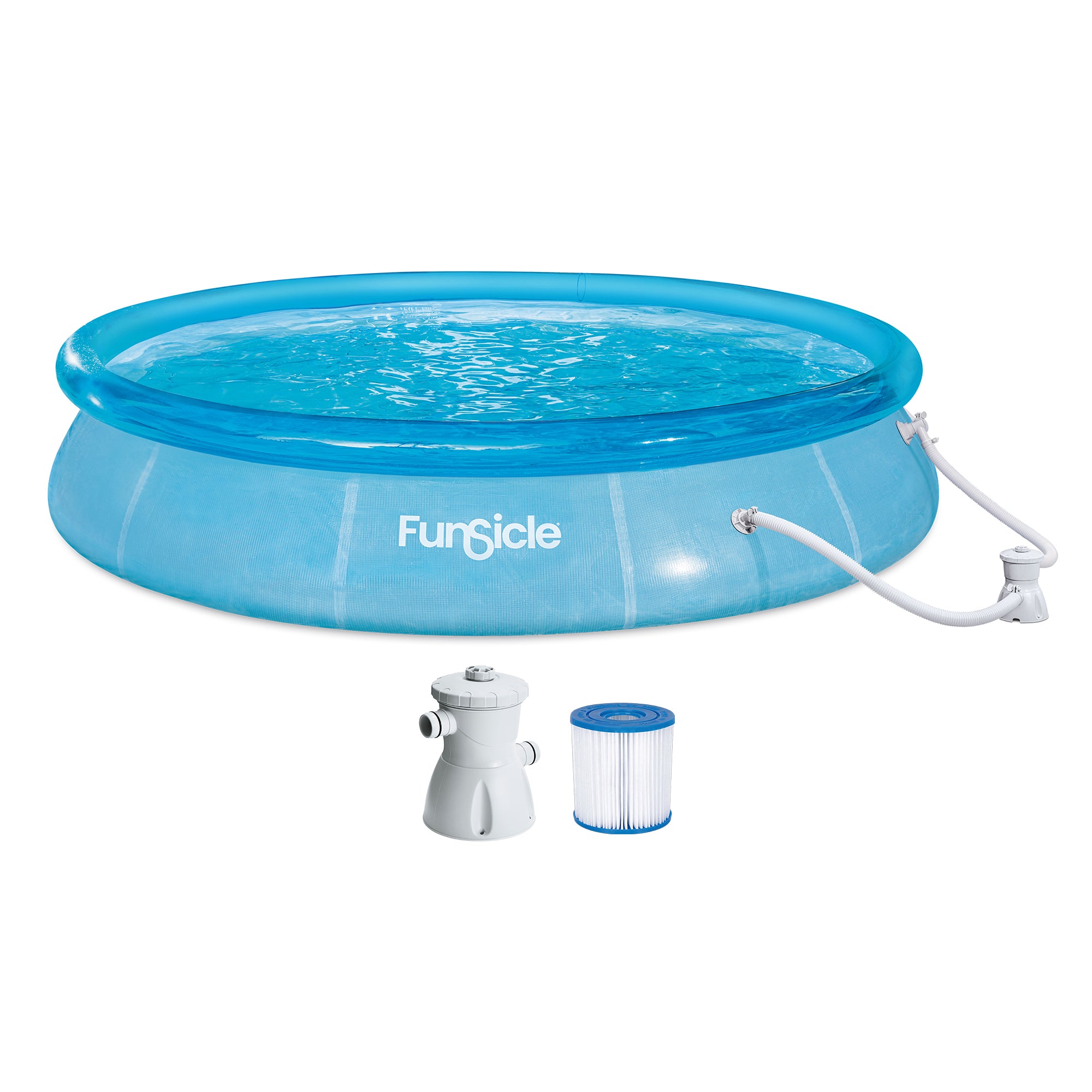
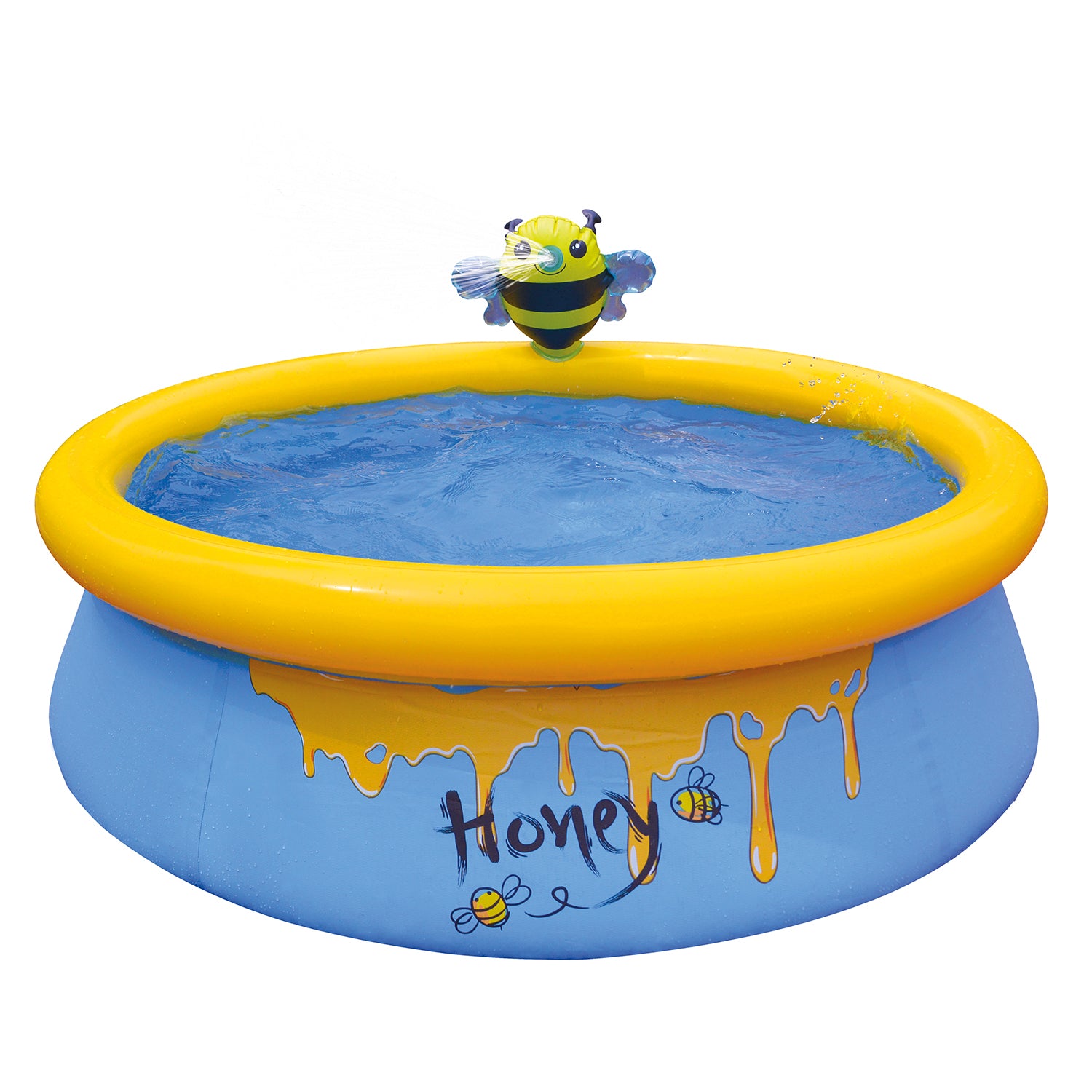
Above ground pools are sized by diameter (for round pools) or length and width (for oval/rectangular pools), and by wall height, which typically ranges from 42" to 54". A taller wall height means more water volume and a deeper swimming experience, but also a higher price and more setup effort.
- Small yards or limited budgets: 12-15 ft round pools are a common starting point.
- Family use with room to swim: 18-24 ft round or 12x24 ft oval pools are popular mid-range choices.
- Larger properties or frequent entertaining: 24 ft+ round or oval pools with a 52"+ wall height.
Whatever size you land on, always check your local regulations — many municipalities require fencing or a safety cover for pools above a certain depth.
Choosing a Pool Pump
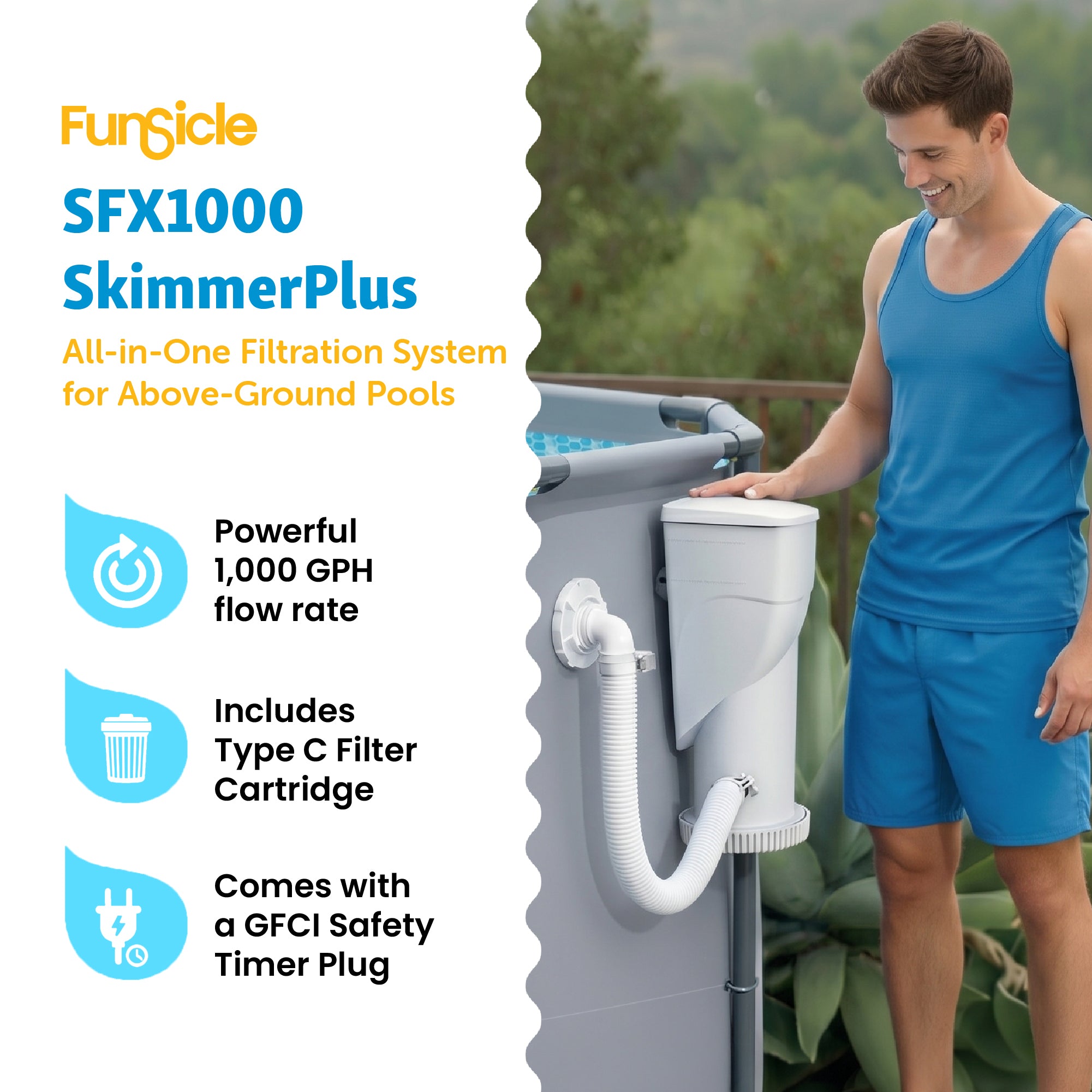
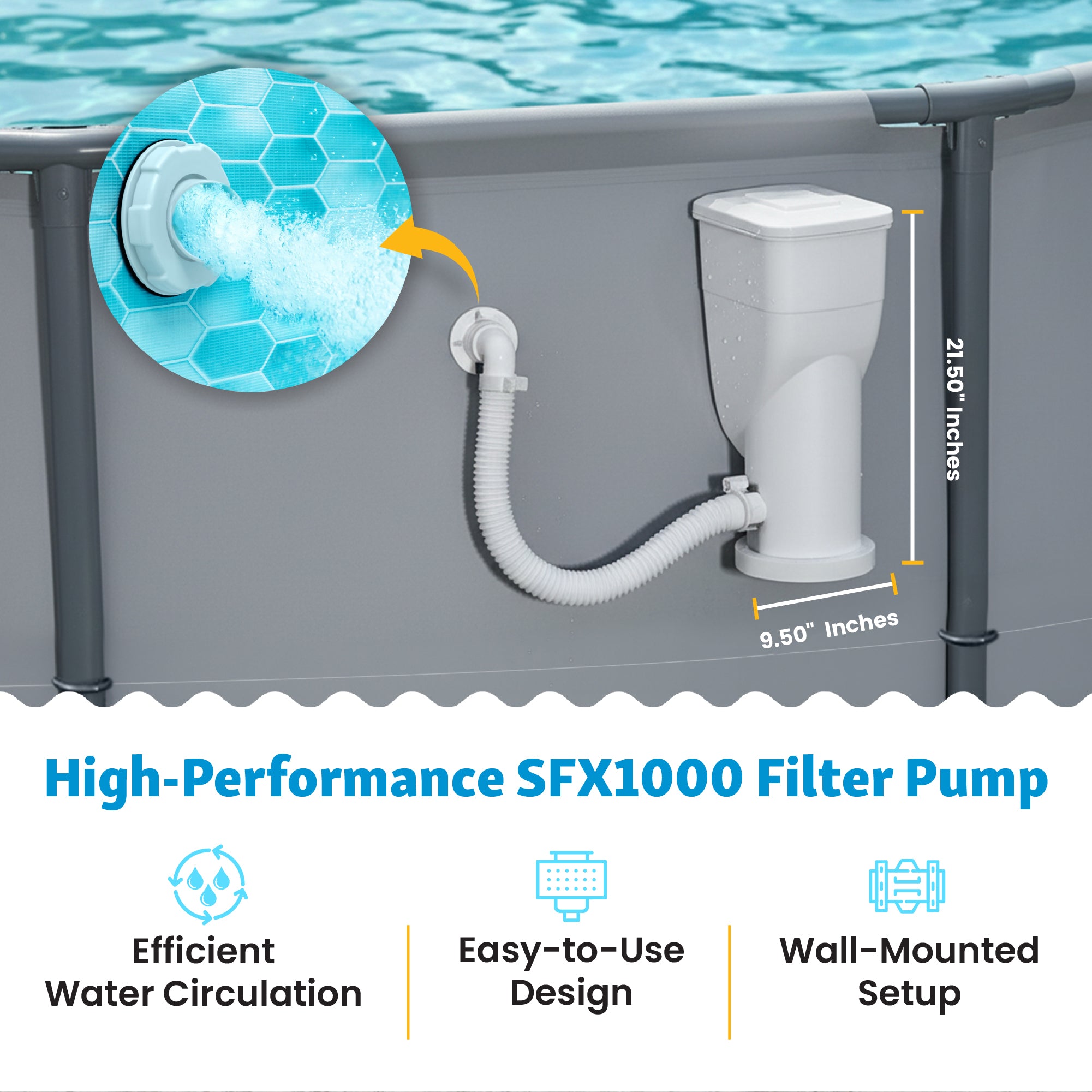
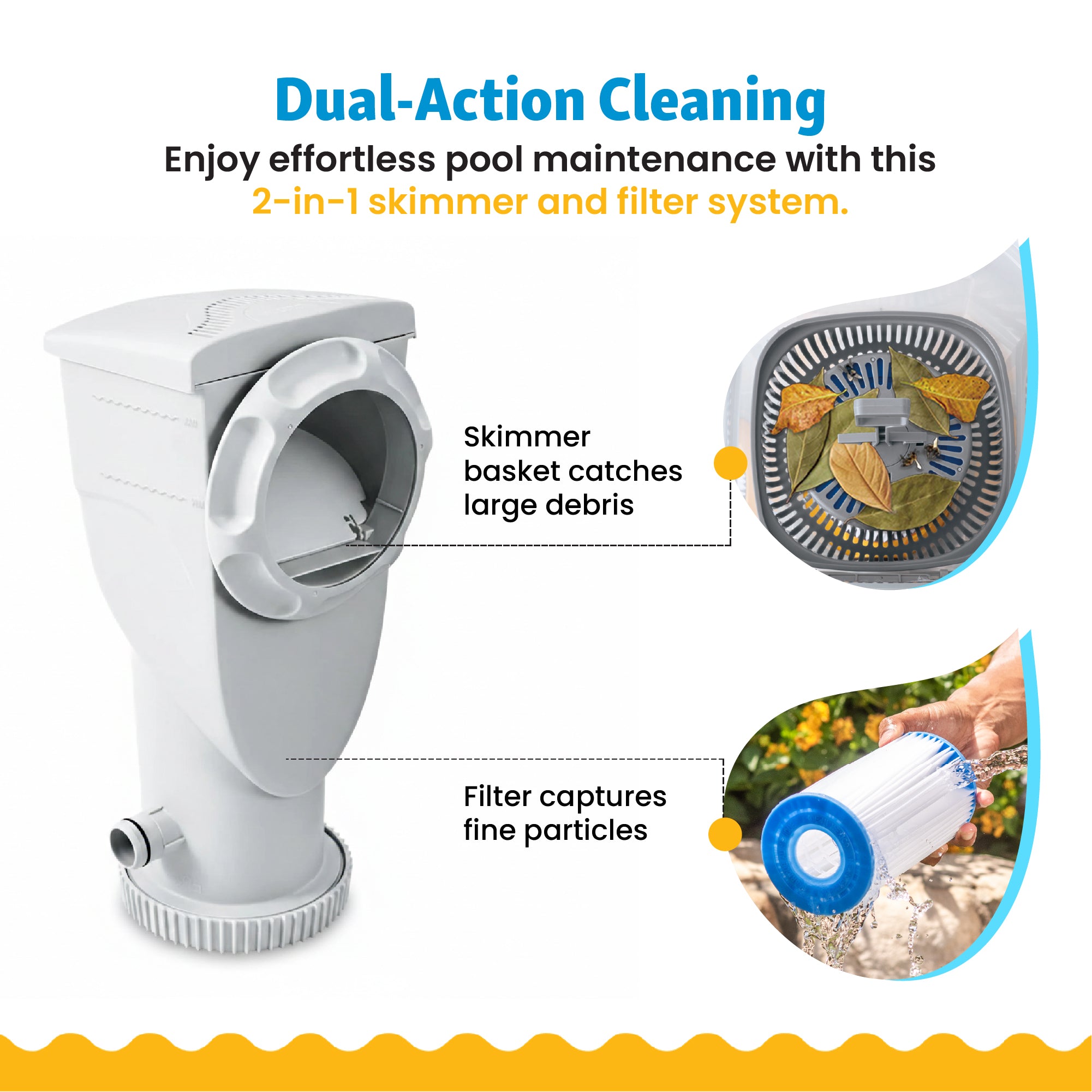
Pool pump size is measured in gallons per hour (GPH), and it should be matched to your pool's total water volume — the goal is to turn over (fully filter) your entire pool at least once every 8 hours. As a rule of thumb:
- Pools under 5,000 gallons: a 1,000-1,500 GPH pump is typically sufficient.
- Pools 5,000-10,000 gallons: look for 1,500-2,500 GPH.
- Pools over 10,000 gallons: 2,500 GPH or higher, and consider a two-speed or variable-speed pump for energy savings.
If you're replacing an existing pump, matching the connection size (typically 1.25" or 1.5") matters as much as GPH — check your pool's filter hose fitting before ordering.
Pool Cleaning: Manual vs. Robotic
Manual vacuums are the lower-cost option and work well for smaller pools or owners who don't mind a weekly cleaning routine. Robotic pool cleaners cost more upfront but run automatically, use less energy than pulling water through your main pump and filter, and typically do a more thorough job on pool floors and walls. For pools over 15,000 gallons, or for owners who want a truly low-maintenance setup, a robotic cleaner usually pays for itself in time saved.
Above Ground Pool vs. Hot Tub
If your priority is swimming, exercise, or entertaining a group in the summer, an above ground pool gives you far more usable space per dollar. If your priority is year-round relaxation, hydrotherapy, or use in cooler months, a hot tub is the better fit — most inflatable and hard-shell hot tubs can be used in temperatures well below what's comfortable for a pool. Some households do both: a seasonal pool for summer and a hot tub that runs year-round.
Pool Heaters and Ladders: Easy to Overlook
A pool heater extends your swim season by keeping water temperature comfortable in spring and fall rather than just peak summer — gas heaters heat fastest but cost more to run, while heat pumps cost less to run but depend on outside air temperature. A secure pool ladder or step system isn't just a comfort item either: most above ground pools over 42" require one for safe entry and exit, and many local codes treat it as a safety requirement alongside fencing.