

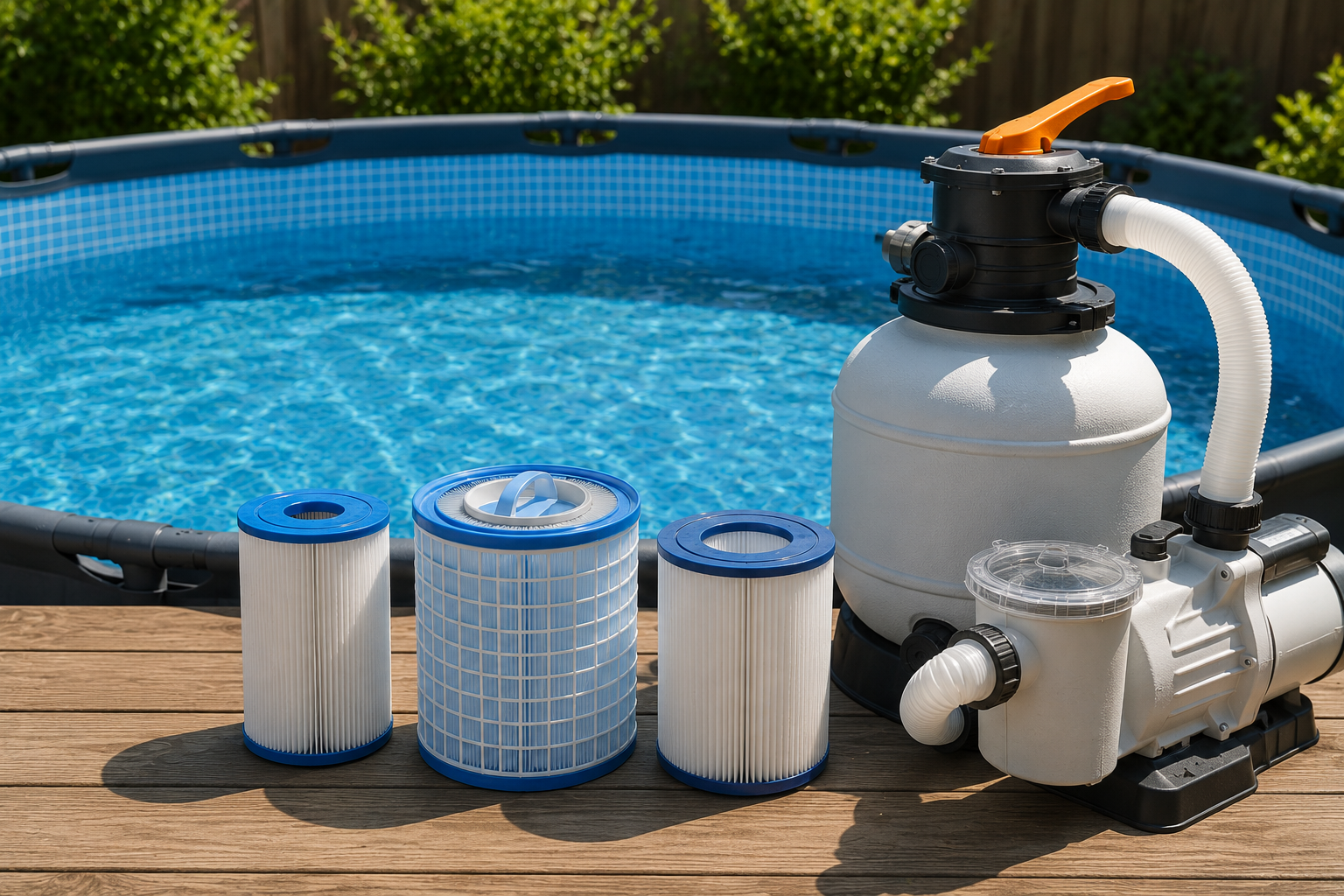
Keeping your pool water clear starts with one piece of equipment: the filter. A pool filter pulls debris, dirt, and contaminants out of the water as it circulates, working alongside your pump to keep your pool safe to swim in and free of cloudy or green water. But with sand filters, cartridge filters, and dozens of pump/filter combos on the market, picking the right one for your pool size and budget isn't always straightforward.
This guide breaks down the different types of pool filters, how to size one correctly, and which options are worth buying — including some of the best above ground pool pumps available right now.
Why a Pool Filter Matters
Every pool needs a way to remove suspended particles — dirt, sunscreen, skin oils, algae spores, and debris — that chlorine and sanitizer alone can't fully handle. The filter works with your pump to pull water out of the pool, strain it through a filtering medium (sand, a cartridge, or diatomaceous earth), and push clean water back in. Without a properly sized, properly maintained filter, even a well-chlorinated pool will turn cloudy and eventually support algae growth.
The 3 Main Types of Pool Filters
1. Cartridge Filters
Cartridge filters use a pleated fabric cartridge to physically trap debris as water passes through. They're the most common choice for above ground pools because they're affordable, easy to clean (just rinse the cartridge with a hose), and don't require chemicals or backwashing.
Pros: Low upfront cost, no backwashing, filters finer particles than sand, easy DIY maintenance Cons: Cartridges need periodic replacement, can clog faster in high-debris environments
A well-sized cartridge system like the Swimline HYDROTOOLS 8 Sq Ft Cartridge Pool Filter System for Above Ground Pools works well for smaller above ground pools, while larger pools benefit from more filtering surface area, like the Swimline HydroTools 50 Sq Ft Sure Flo Cartridge Pool Filter Tank and Elements.
2. Sand Filters
Sand filters push water through a tank filled with specially graded filter sand, which traps particles as small as 20–40 microns. They're a popular choice for slightly larger above ground and inground setups because they're low-maintenance and only need sand replaced every 3–5 years.
Pros: Long-lasting, simple to operate, lower long-term cost than replacing cartridges Cons: Larger physical footprint, requires backwashing (which uses extra water), doesn't filter quite as fine as cartridge or DE
If you're setting up or replacing a sand filter, you'll need filter-grade sand — never use play sand or construction sand. Purpose-made options like US Silica Mystic White II Premium Swimming Pool Filter Sand or OptiFlow 50lb Premium Pool Filtration Angular Sand are graded specifically for pool filtration.
3. Diatomaceous Earth (DE) Filters
DE filters coat a set of internal grids with diatomaceous earth powder, resulting in the finest level of filtration available — down to 2–5 microns. They're most common on larger inground pools where water clarity is a top priority.
Pros: Finest filtration available, crystal-clear water Cons: Higher cost, more maintenance-intensive, requires handling DE powder, less common for above ground pools
For most above ground pool owners, a cartridge or sand filter will deliver excellent results without the added complexity of DE.
How to Choose the Right Pool Filter
Match the Filter to Your Pool's Volume
Every filter has a maximum flow rate, usually listed in gallons per hour (GPH) or gallons per minute (GPM). As a general rule, your filter and pump should be able to turn over your entire pool's volume at least once every 8 hours.
-
Pools under 5,000 gallons: 1,000–1,500 GPH filter pump
-
Pools 5,000–10,000 gallons: 1,500–2,500 GPH filter pump
-
Pools over 10,000 gallons: 2,500+ GPH, or a sand/cartridge system rated for higher flow
Consider Filter Surface Area (Cartridge Filters)
For cartridge systems, more square footage of cartridge surface means less frequent cleaning and better flow. An 8 sq ft cartridge is a reasonable baseline for smaller pools, while pools over 10,000 gallons often do better with 40–50 sq ft systems.
Factor in Maintenance Preferences
If you'd rather rinse a cartridge a few times a season than deal with backwashing and sand replacement, a cartridge filter is the simpler choice. If you prefer a "set it and forget it" system that only needs attention every few years, sand is worth the larger footprint.
Check Pump Compatibility
Many filter systems are sold as complete pump-and-filter combos, which take the guesswork out of matching flow rates. An all-in-one option like the Swimline Cartridge Pool Filtration with Pump Built-In Housing Complete System or the Bestway 2,200 Gallon Sand Filter Pump for Above Ground Outdoor Swimming Pools simplifies setup for above ground pools.
Best Above Ground Pool Pumps
Since the pump and filter work as a system, picking a well-matched pump is just as important as picking the filter itself. Here are a few strong options across different pool sizes:
-
Bestway Flowclear 1,500 GPH 120V Above Ground Swimming Pool Water Filter Pump — A solid mid-range pick for pools in the 5,000–10,000-gallon range, offering reliable flow without oversizing the system.
-
Bestway Flowclear 1,000 GPH Above Ground Swimming Pool Filter Pump, 2-Pack — A good value option for smaller pools, or for owners who want a backup pump on hand.
-
Bestway 2,200 Gallon Sand Filter Pump for Above Ground Outdoor Swimming Pools — A complete sand filter and pump system for owners who want low-maintenance, long-term filtration.
-
Swimline Cartridge Pool Filtration with Pump Built-In Housing Complete System — An all-in-one cartridge and pump unit that's easy to install and simple to maintain.
Don't Forget Replacement Cartridges
If your pool already came with a filter pump, you likely just need periodic cartridge replacements rather than a whole new system. Keeping spares on hand — like the Intex Swimming Pool Easy Set Type B Replacement Filter Pump Cartridge (8-Pack) — means you're never caught without a clean cartridge mid-season.
Signs Your Pool Filter Needs Attention
-
Cloudy water that doesn't clear up after shocking the pool
-
Rising pressure gauge readings on sand or DE filters (a sign it's time to backwash)
-
Reduced flow from return jets
-
Visible debris building up faster than usual
-
Cartridges that look torn, warped, or heavily discolored
Catching these signs early prevents bigger problems like algae blooms or pump strain.
Frequently Asked Questions
- How often should I replace my pool filter cartridge? Most cartridge filters should be rinsed every 2–4 weeks during swim season and fully replaced once a year, or sooner if you notice reduced flow or visible wear.
- How often does sand need to be replaced in a sand filter? Pool filter sand typically needs replacing every 3–5 years, depending on usage and how consistently the pool is maintained.
- What size pool filter do I need? Match your filter and pump's GPH rating to your pool's volume so the system can turn over your entire pool at least once every 8 hours — smaller pools need roughly 1,000–1,500 GPH, while larger pools need 2,500+ GPH.
- Can I use a sand filter on a small above ground pool? Yes, but cartridge filters are often more practical for smaller above ground pools since they're less bulky and easier to set up without a dedicated equipment pad.
- Is a bigger pool filter always better? Not necessarily. Oversizing a filter beyond what your pump and plumbing can support wastes money and doesn't improve water quality — the goal is matching filter capacity to your actual pool volume.
The Bottom Line
The right pool filter comes down to matching your pool's size to the appropriate filter type and flow rate — cartridge filters for easy, low-cost maintenance; sand filters for a more hands-off, longer-lasting setup. Whichever you choose, pairing it with a properly sized pump is what actually keeps your water clear all season long.
Browse the full range of pool filters, pumps, and filtration systems to find the right fit for your pool.
Share:
Most Popular Pool Sizes in America: Above Ground Pool Size Data Guide
Pool Maintenance FAQs: Answers to Your Most Common Pool Questions