

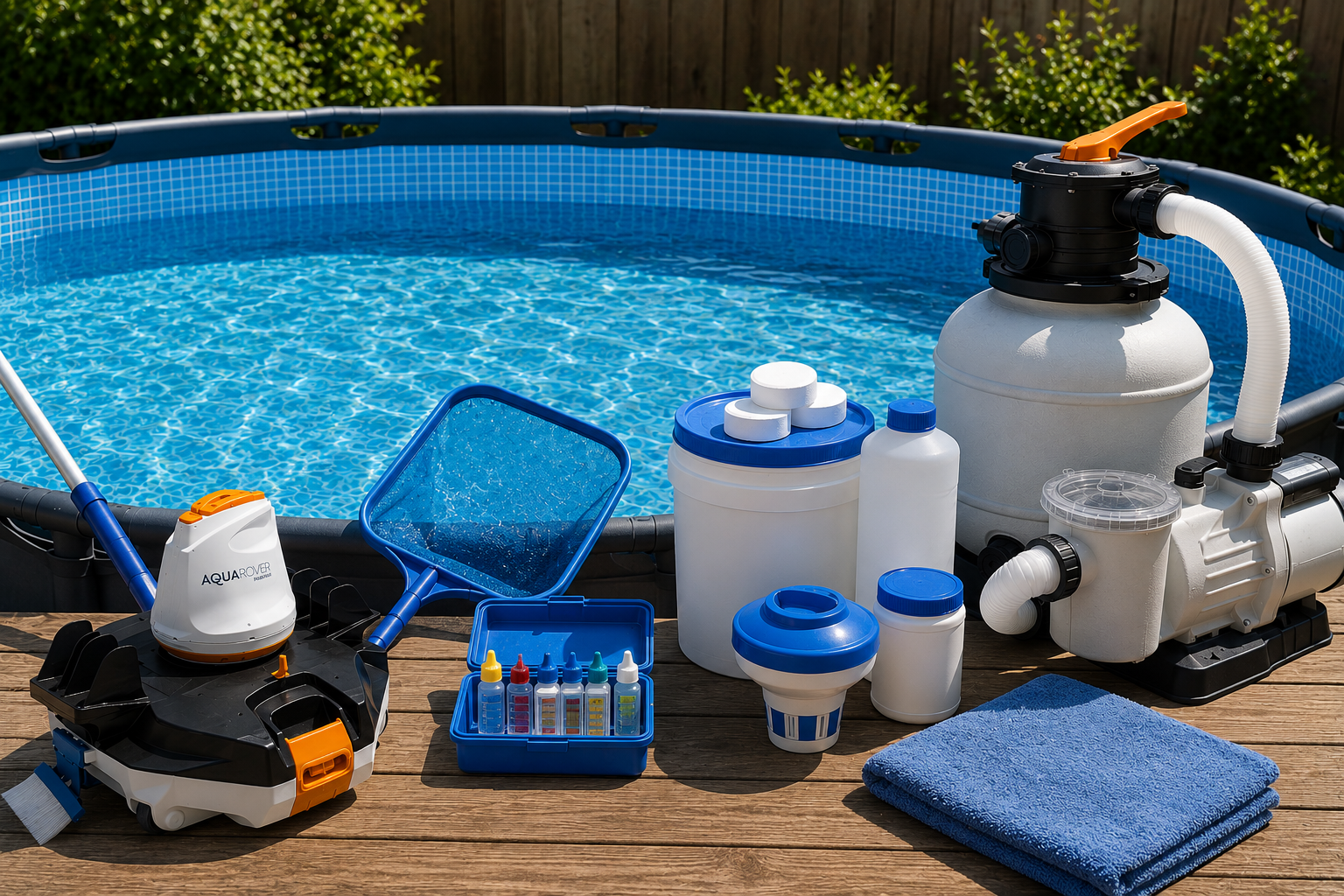
Owning a swimming pool is a great way to make the most of your backyard, but keeping the water clean, equipment running efficiently, and swimmers safe requires regular maintenance.
From choosing the right filter to understanding when to replace pool sand, many pool owners have the same questions about routine maintenance. This guide answers some of the most common pool maintenance FAQs and covers essential equipment such as pool filters, a pool heater, and a pool ladder.
Pool Maintenance FAQs
1. How often should I replace my pool filter cartridge?
Most cartridge filters should be rinsed every 2–4 weeks during the swimming season, although pools with heavy debris or frequent use may need more frequent cleaning.
A cartridge should generally be replaced about once a year, but the actual replacement interval depends on usage and maintenance. Replace it sooner if you notice visible damage, deterioration, or reduced water flow even after cleaning.
A simple maintenance routine can help extend the life of your filter cartridge:
-
Turn off the pool pump before removing the cartridge.
-
Remove the cartridge according to the manufacturer's instructions.
-
Rinse the cartridge thoroughly with a garden hose.
-
Inspect the pleats for damage or excessive wear.
-
Allow the cartridge to dry or reinstall it as recommended by the manufacturer.
-
Replace the cartridge when cleaning no longer restores adequate water flow.
Regular filter maintenance is one of the simplest ways to keep your pool circulation system working properly.
2. How often does sand need to be replaced in a sand filter?
Pool filter sand typically needs to be replaced every 3–5 years, although the exact timing depends on how often the pool is used, how much debris enters the water, and how consistently the filter is maintained.
Instead of replacing sand based only on age, watch for signs that the filter isn't performing as it should.
Potential warning signs include:
-
Water remains cloudy despite proper chemical balance.
-
Filter pressure behaves differently than normal.
-
Backwashing becomes less effective.
-
Sand becomes damaged or channelled.
-
Water quality continues to decline despite proper filtration and chemical maintenance.
Always follow the sand filter manufacturer's instructions for the correct type and grade of replacement media.
3. What size pool filter do I need?
The right filter size depends primarily on your pool's water volume and the flow rate of your pump.
A useful starting point is to size your circulation system so the pool can turn over its full volume within approximately eight hours.
For example, a pool containing 8,000 gallons would need an average flow rate of about:
8,000 ÷ 8 = 1,000 gallons per hour
This doesn't mean you should automatically buy a 1,000 GPH system. Pump flow, filter capacity, plumbing resistance, head pressure, and the manufacturer's specifications all matter.
As a general starting point:
| Pool Size | Approximate Volume | Example Minimum Turnover Flow |
|---|---|---|
| Small pool | 3,000–5,000 gallons | 375–625 GPH |
| Medium pool | 6,000–10,000 gallons | 750–1,250 GPH |
| Large pool | 12,000–20,000 gallons | 1,500–2,500+ GPH |
These are planning examples rather than universal equipment specifications. Always match the pump and filter according to the manufacturer's recommended flow rates.
4. Can I use a sand filter on a small above-ground pool?
Yes, but a cartridge filter can often be more practical for smaller above ground pools.
Cartridge systems generally have a simpler setup and don't require backwashing, which can be convenient when working with a smaller pool.
Sand filters can make more sense for larger pools or pool owners who prefer the longer maintenance intervals associated with filter media.
The right choice depends on:
-
Pool volume
-
Pump flow rate
-
Available equipment space
-
Maintenance preferences
-
Local water-use considerations
-
Manufacturer compatibility
If you're purchasing a new above-ground pool, consider the filtration system that comes with the pool rather than choosing the filter separately.
For example, the Intex 12-foot × 30-inch Easy Set Above Ground Swimming Pool with Filter Cartridge Pump includes a cartridge filtration system and is currently listed as in stock at VMInnovations.
5. Is a bigger pool filter always better?
No.
A larger filter isn't automatically better if the rest of the circulation system isn't designed to support it.
The goal is to create a properly matched system where the pump, filter, plumbing, and pool volume work together.
Oversizing equipment can increase your upfront cost without necessarily improving water quality. On the other hand, an undersized filter may struggle with the amount of water and debris it needs to process.
Instead of simply choosing the largest available filter, compare:
-
Pool volume
-
Pump GPH
-
Filter capacity
-
Plumbing size
-
Manufacturer recommendations
-
Expected debris load
6. How often should I run my pool pump?
Pump runtime depends on pool size, water temperature, usage, weather, debris levels, and the capacity of the circulation system.
Rather than following a universal number of hours, calculate how long your system needs to run to achieve the desired turnover and then adjust based on actual water clarity and operating conditions.
During periods of heavy use or extreme heat, you may need to run the circulation system more frequently.
7. Do I need a pool heater?
A pool heater isn't necessary for every pool, but it can extend the swimming season and make the water more comfortable when outdoor temperatures drop.
For above-ground pools, solar heating products can be an option for owners looking for a lower-complexity way to add heat.
The Intex Above-Ground Swimming Pool Water Heater Solar Mat is currently listed as in stock at VMInnovations and is designed for an 8,000-gallon above-ground pool.
When choosing a heater, consider:
-
Pool volume
-
Desired temperature increase
-
Local climate
-
Available sunlight
-
Pump compatibility
-
Operating costs
8. Do I need a pool ladder for an above-ground pool?
A properly designed pool ladder can make getting in and out of an above-ground pool safer and more convenient.
The ladder should match the pool's wall height and construction.
For example, the Bestway Flowclear 52-Inch Heavy-Duty Metal A-Frame Above-Ground Pool Ladder is currently listed as in stock and features double-sided steps and a corrosion-resistant coated metal frame.
Another option is the Intex Above Ground Steel Frame Pool Ladder for 42-Inch Pools, which is also listed as in stock.
Always check the ladder's compatible pool wall height before purchasing.
9. How often should I clean my pool?
Pool cleaning frequency depends on how much debris enters your pool and how often it is used.
A basic routine should include:
-
Skimming leaves and debris.
-
Brushing the pool walls.
-
Vacuuming the pool floor.
-
Cleaning the filter.
-
Checking water chemistry.
-
Emptying skimmer and pump baskets.
-
Inspecting equipment.
Pools surrounded by trees may require more frequent cleaning than pools in open areas.
10. How do I know if my pool filter isn't working properly?
Cloudy water isn't always caused by a bad filter. Water chemistry, circulation problems, algae, and inadequate cleaning can all contribute.
However, potential signs of a filtration problem include:
-
Reduced water flow.
-
Increasing filter pressure.
-
Persistent cloudy water.
-
Frequent need for cleaning or backwashing.
-
Visible damage to the filter.
-
Water returning to the pool with debris.
Before replacing the filter, check water chemistry, pump operation, valves, baskets, and plumbing.
Pool Maintenance Checklist
For easier maintenance, use this simple routine:
Every few days
-
Check water clarity.
-
Remove visible debris.
-
Check equipment operation.
Every 1–2 weeks
-
Test water chemistry.
-
Brush the walls and floor.
-
Inspect the filter.
-
Empty baskets.
Every 2–4 weeks
-
Rinse cartridge filters during active swimming season.
-
Inspect hoses and connections.
-
Check the pool ladder and other equipment.
Annually
-
Inspect or replace worn filter cartridges.
-
Inspect the pump, filter, heater, ladder, hoses, and other equipment.
-
Review your winterization or seasonal closing procedure.
Final Thoughts
Good pool maintenance doesn't have to be complicated.
The key is matching your equipment to your pool and staying consistent with basic maintenance. Keep the filter clean, monitor water chemistry, inspect circulation equipment, and make sure accessories such as your pool heater and ladder are appropriate for your pool.
Whether you're maintaining a small backyard pool or a larger above-ground setup, a regular maintenance routine can help keep your water clear and your equipment working efficiently.
Share:
Pool Filter Buying Guide: How to Choose the Right Pool Filter
Robotic vs. Manual Pool Cleaners: Which Pool Cleaner Is Right for You?